

Umbilical Cord Blood Banking Well, everyone does that. It’s the most logical thing to do. Mothers especially are too cautious when it comes to taking decisions that concern their children’s health or wellbeing. If you are a mother or a parent of a child, you will better understand what I am talking about. * Consider this scenario. You are presented with the opportunity of taking a crucial decision. This particular decision could be the only alternative to save your child, if he/ she suffers from certain health disorders in the future. Would you say yes or refuse to go with this option? I guess this question is irrelevant because of the logical conclusion that you would jump at such a chance, wouldn’t you? Trust me; any parent in your shoes would have done just that. * Understanding Umbilical Cord Blood Banking : Stem cell banking or cord blood banking is something that promises exactly that. All it takes is merely a simple decision on your part to preserve your newborn baby’s umbilical cord blood. This can go a long way in preserving good health for your child, close family members or even to utter strangers in future. * Range of Possibilities: Medical research has confirmed that the stem cells that are found within the umbilical cord blood possess the ability to replicate themselves and form any cell of any organ of the body. This particular unique characteristic trait of these stem cells beholds innumerable treatment possibilities in the current medical scenario. The best part about this wonderful breakthrough in medical science is that it is absolutely undemanding and does not need any surgery or complex medical procedure to source the umbilical cord stem cells. All that you need to do is to arrive at a decision to bank or preserve your baby’s umbilical cord. Considering that the umbilical cord is something that you would be throwing out after birth of your baby anyway, your decision to preserve it for future treatment possibilities is certainly a tremendous decision on your part. * Benefits of Umbilical Cord Blood Banking: The stem cells that are sourced from umbilical cord can be utilized in treating a variety of disorders like cancers, Thalassemia, Diabetes, Stroke, Cerebral palsy, brain injury etc. These stem cells sourced from the umbilical cord can be used for the child, his/ her sibling, a close family member or to someone totally unrelated. * Full blown research and clinical trials are going on in this comparatively new method of treatment. So a decision to preserve your baby’s umbilical cord blood can signify that in future when treatment of newer diseases using cord stem cells is made possible, your child stands to have an advantage over others who do not have their umbilical cord blood preserved. * As a parent you may take many important decisions on behalf of your children, but the decision to store the umbilical cord cells definitely tops the list. What else could be more comforting to parents other than securing the health and longevity of their children?

Mental Health Awareness in Schools I was in a rural area this week and happened to visit a couple of schools run by an NGO. Let me first tell you about the mission of this organization. It is to raise awareness among parents in rural areas about the quality of education. * The organization serves more as a catalyst and the villagers themselves form a committee which supervises the running of the school. The organization takes on hiring teachers/training them, etc while the committee decides on budgeting, admission criteria (these schools serve families in the lowest strata-economic and social) and such. * The professionals work to create a scope and sequence of skills in the subjects and the classes are multi age groups. The kids help their parents on the farm during harvest time and stroll in-even 5 yr old kids walk 4-5 km to come to school. They bring their own lunch but they come! After the initial couple of years the families (who are poor) joined forces and donated land for the school -with ample play ground space. * The kids come in the morning and join the teachers in play or in cleaning up the school grounds. Then comes the assembly- where they sing, enact plays and interestingly enough-change the school timings-because the weather is so severe over a period of time, the hours of the school changes during those months. * The kids and teachers vote on what is best and majority wins. Kids don't have to ask for permission to get up and go to the bathroom or to drink water. They come right back...They understand that it is shared control rather than authority handing down rules. * As the neighbouring villages realized the quality of education in the first school, they grouped together and asked for a similar school near their villages...even the nay sayers agreed eventually. * I liked how the teachers taught and how the kids took to learning. It was a distraction to have us in their rooms (one little girl let us know at assembly-Ay Madam, meri class ajao), and the teacher redirected them to their task. "It is exciting to have people but if we forget our job, it affects only us. So let's see if we can calm ourselves soon so we use our time well." Who says it is difficult managing a large classroom? * The kids were very well behaved but I think it was because they were free from the pressure of the academics and some of the rigidity in typical schools-they were assessed but no painful exams. The fidgety children have plenty of room to move/jump/rock and then settle down to work. * Some children were in tattered clothes but not one expected a handout-they just wanted to read and show us what they knew. Mental health is not just about what is lacking-it is also about what is abundant. There was confidence, pride and ownership and the kids were very happy to share those with us.

Senile Dementia in Children Over the years, medical science has made great progress. We have either eradicated many life-threatening diseases of the past and are also able to control or treat a lot of ailments, thus increasing the life span of human beings greatly. * Unfortunately, however, Mother Nature has other tricks up her sleeve and continues to show us who is boss. We might live longer, but along with that there is an increase in the incidence of a host of physical and mental illness that are associated with old age. * Senile dementia and Alzheimer's (which is a kind of senile dementia) are commonly seen in elders and are seen with alarming frequency these days. * Dementia is a loss of brain function which occurs with certain diseases. It is caused due to degenerative changes and is irreversible. It impairs cognitive functions, memory, thinking, language, behaviour and judgement. Dementia occurs more commonly in elderly people and is rare in people under the age of 60. * Dementia in old age occurs often because of abnormal protein structures in certain areas of the brain. Dementia can also be caused by strokes i.e. vascular dementia. Diseases which can lead to dementia include illnesses which affect the neurological system including the brain such as Parkinson's disease, multiple sclerosis, Huntington's disease and infections such as HIV/AIDS and Lyme disease. * Other diseases which can cause dementia include metabolic disorders such as imbalance in blood sugar, blood electrolytes (sodium, calcium, potassium), low vitamin B12 levels, but the good news is that if these are detected early, the symptoms of dementia can be reversed. Alcoholism is also another cause of dementia. * The first sign of dementia is forgetfulness. Some people suffer from mild congnitive impairment. Here there is a problem with thinking and memory, but this does not necessarily interfere with normal activities. MCI does not necessarily lead to dementia.




Adopting After Having a Biological Child Till about a couple of decades back, adoption was talked about in hushed tones, and if it was happening, it happened only within the family, so as to maintain the so called ‘purity of the lineage’. Then, around 10 years back, as social awareness grew, adoptions by childless couples no longer saw raised eyebrows. * But nowadays, it is no longer restricted to childless couples. As horizons widen and boundaries shrink, today there are a lot of couples with biological children who are opting for adoption to give their child a sibling. * Preparing the biological child for the arrival of an adopted sibling, and vice-versa, is of primary importance. As Vanashree says, ‘We told Antaraa that it was her guardian angel that told us that her sister was waiting for us to come and pick her up.’ * Nisha, on the other hand, linked the adoption of Ayaan to the story of Krishna being born to Devaki, but being brought up by Yashoda. However, even after a lot of preparation, the first few months of adjustment can be difficult for the entire family. * As Deval says, ‘The first month was very painful. Saumya used to call me didi and she would be very silent with me and my husband. She used to relate better to my biological sons. We gave her lots of time and space and then, after around eight months, she turned around so beautifully that today nobody looking at her would think that she wasn’t always a part of our family.’ * Discipline is a big part of parenting and parents should not hesitate to discipline their child, adopted or biological. When a situation involves disciplining an adopted child, just take a minute, step back and ask yourself how you would have handled the situation, if it involved your biological child and then, do the same thing.Do not try to hide the fact that your child is adopted, either from the children or from outsiders. But on the other hand, do not go around advertising this fact also. * To outsiders, disclose this information on a need basis, and only if you are sure that they are not going to be judgemental about it. As Nandini says, ‘While trying to explain about the concept of adoption to both the girls, we found it simplest and most effective to say that Sumedha chose us for parents while we chose Sukriti for a daughter.’Despite all these preparations, brace yourself for some conflict situations between the children, especially if the age gap between them is very less. Be fair to both kids and take a balanced view. * Adopting, while already having a biological child, is a big decision to take. Do it only if the immediate family is on the same page as you are.Follow your heart. Don’t do it for charity or to prove something to somebody else. Do it only when you know with certainty that that adopted child will be the one to complete your family.
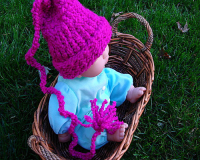
Keeping Babies Warm In Winter This winter, babies need about the same number of layers as adults for comfort and protection, indoors or out. A newborn’s ability to regulate body temperature is not well developed, so you need to pay special attention to how they are dressed. * Some sleepers have cuffs that fold over to keep hands warm, but as babies find their mouths with their fists, be sure the sleeve cuffs are kept dry. Evaporating moisture in wet clothes tends to cool the hands and body.For tiny babies, cotton jersey knit gowns that tie at the bottom keep feet warm and are convenient for changing diapers. As baby grows, soft one-piece knit sleepers with feet and a gripper or zip opening from neck to toes make baby easy to handle. These do not gap open at the waist as can happen with two piece outfits. * The first week or two, your baby may feel more secure if wrapped snugly in a flannel receiving blanket.Keep blankets away from the infant’s face, and place babies on their backs for sleeping at night to reduce the risk of smothering.Cloth diapers need to be changed more often than disposables. Change them whenever you find them wet, to reduce the chance of diaper rash. Disposable diapers may be required by day care providers and are more convenient for travel. * Wrap small babies in a soft cotton flannel “receiving” blanket. Wrap heavier fleece or quilted blankets over the first one for added warmth and protection. When you dress a baby for travel in a car, a snowsuit or car seat-friendly bunting with a button hole for the seat-belt is needed to fasten the baby in the car seat. * A snowsuit should have feet and hand covers. A snowsuit should have a wind and water repellent outer layer and an inner layer of fiber-fill, flannel, or fleece that holds still air to insulate. A warm blanket may be neededover these suits, if it is very cold outdoors. * Remember to protect the baby’s face from wind and sun-burn. Usually, you can drape one of the blankets loosely across the face during trips between the house and car. Be sure to uncover the child’s face afterward. Be careful that the blankets used to wrap the baby are not so slick that the baby slips and falls out of your arms. * If you are indoors, such as at a mall for an extended period of time, take the baby out ofthe snowsuit or from under the covers, to prevent overheating and perspiration that can dampen clothes. Clothes that are damp will not be warm when you return outdoors again.

Sun Safety Tips For Babies Sun Safety for Babies, Top Sun Safety Tips, Sunburn Sun Safety Tips Kids, Sun Protection Safety Tip: What matters is the time when expose your child to the sun. When the sun rays are the harshest, they can burn your baby’s skin badly. Read on to know such more facts about baby sun protection and tips to protect your baby from the harmful rays of sun. * Set a time to expose your baby in the sun, preferably not between 11-3 as run rays are the harshest at this time and will harm your baby’s skin, instead of benefiting it. * If you are exposing your baby to sunlight, cover him/her with light colored fabric, such as light blue or white, covering the head as well, as these colors do not absorb fully the sunlight but reflect it back. Always place the baby in such a position that his/her back is facing the sun. In this way, he/she will only get the healthy sunlight energy. * If your baby is more than 6 month old, you can also buy some non-alcoholic, milky sun creams for them and apply it all over the exposed parts to seek more protection. * You need to ensure that after you expose the baby to sunlight, he/she doesn’t get any rashes on the skin, as it a sign of allergy and need not be overlooked. * Look for toy sunglasses which have 100% protection from sun rays as pupil in their eyes absorb more light in the sun, which is not safe for your baby. * Get a nice thick cloth shady toddler for your baby, in case you are going outside and needs to take your baby with you. * Your baby’s lips are also very sensitive. Always use petroleum jelly to shield lips from sun even on cloudy days, as most of the sunrays penetrate through clouds and can be harmful. * If despite all possible efforts your baby does get sunburns, seek treatment for it and give your baby lots of fluids
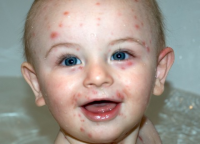
Causes of Smallpox in Babies Small Pox is an incurable disease and the only possible way of fighting it is vaccination. Smallpox is an extremely dangerous virus which, in babies, can many times provoke death. Smallpox is a contagious disease, which is caused by an infectious virus called variola. As a matter of fact, children, especially babies are more susceptible to infections and germs, thus smallpox is widely prevalent in newborns. Some sources of smallpox infection are mentioned here. • If your newborn comes in contact with an infected person, he is more likely to catch the infection. • Variola can pass on to your baby through air droplets when a smallpox patient coughs or sneezes. • Proximity to contaminated objects is another potential cause of smallpox.
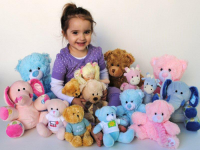
Newborn Baby Toys Baby toys are generally colorful, so that they appear attractive to the eyes of the babies. Infant toys are generally attached to the cribs or set on the floor, as the child can't move. * Nesting Cups * Rattles & Teethers * Stacking Rings * Soft Baby Building Blocks * Nesting Cups Nesting cups come in different colors and sizes, so that they can be stacked or nested. These toys can be used to develop the color and size recognition abilities and hand-eye coordination of the baby. The best nesting cups are made of plastics that come in several solid colors and may consist of more than five cups. * Rattles & Teethers Rattles & Teethers are great toys for children, especially when they are learning to chew. However, it is better to keep them in refrigerator when unused. The coolness of the refrigerated rattle will be a relief to the gums of the baby. Toys that make noise or move when squeezed also create massive development in the child. Babies get to know that their act of squeezing the toy makes it move or creates some sound from the toy. * Stacking Rings Stacking rings are as educational as nesting cups and come in different colors and sizes placed in a cone. These rings also help the child in color and size recognition, hand-eye coordination and for pretend play as well. The most inexpensive stacking rings are made of plastics. You can also buy the more fancy rings, which also contain other fun activities for the child. * Soft Baby Building Blocks Soft baby building blocks help the baby to develop motor skills. The baby will use his/her little fingers to grasp, lift and manipulate the building blocks. As such, they are considered to be one of the best toys for the little ones. For a very young age group, soft baby building blocks are preferable. You can also choose blocks with other activities embedded in them to increase their play value for the child.
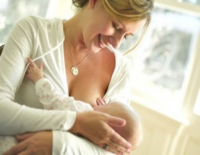
Baby Breastfeeding Problems Some common problems associated with breastfeeding that one out of every two mother faces. While some problems disappear in due course of time, there are some that need professional help. * can happen because you have slept in a wrong position, sat for a few hours with the seat belt across your breast or a tight bra. Massaging the area or using warm compress on the area will help the lump to dissolve. If possible, position the baby in such a way that his/her jaw is near the lump, so he/she can feed and help in dissolving the lump. Feed from the sore side, if it doesn't work express milk from the breast. * White marks or sore nipples that don’t seem to heal are known as thrush. It can appear when either you or the baby have taken a course of antibiotics or may appear without any particular reason. Both of you may have to take oral medication or use anti-fungal cream. * Secondary engorgement takes place when the baby reduces the number of feeds he/she takes, maybe because he/she has started sleeping for longer hours at night. If this is the case, your body will reduce the amount of milk it is producing. Feed the baby more often to reduce engorgement. If baby is unable to latch on properly, express some milk to help him/her do so. Wear warm flannel clothing to ensure milk flow or have a warm shower before feeding to ensure the same. Using chilled cabbage leaves inside your bra can reduce the swelling. * baby is sucking your nipple and not the breast as a result of bad positioning. Dislodge the baby by inserting your finger gently into his/her mouth to break the grip. Reposition your breast, so that the breast and not just the nipple go inside the baby’s mouth. Try different positions. Express milk and rub it on the nipples as this will help in healing. Use the less sore side to feed the baby. * baby may want to keep feeding all the time as he/she is not positioned properly and there is insufficient supply of milk. In the initial days, the baby may insist on feeding continuously, simply because he/she enjoys it and breastfeeding is very comforting for him/her. It could also happen if the baby is trying to increase the supply of milk. If this activity is a change from his/her normal feeding pattern, it may return to normal in a day or two.
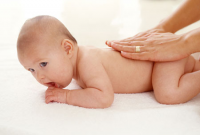
Baby Skin Care Tips in Winter Baby skin is sensitive and susceptible to the winter cold. You need to take special care to make sure your baby skin is not affected with cold. * Keep your baby’s clothes on a warm space before dressing. * Change baby’s clothes in stages so they are never entirely naked. * Heat the bathroom before taking baby for a bath. * Do not bring the baby outside directly after taking a bath. * Baby lotion is a good moisturizer. Spread the baby lotion as much over baby’s body as possible. * Exposure to water can make the skin rough and dry, so do not take baby for a bath every day. * Use soft winter clothes for your baby. A warm wool, cap and gloves are helpful to protect the delicate skin on hands, face and head. * Use skin care products which are rich in Vitamin A, Vitamin D and Vitamin E. * Use cold creams in place of baby powders. Creams form a protective layer that protects against roughness, moisture and uneasiness. *To prevent dry lips, apply lip care jelly for babies within a period of 3 to 4 hours.
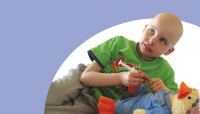
Kids With Cancer The types of cancers that occur most often in kids are different from those seen in adults.If your kids has just been diagnosed with cancer, is going through treatment, or is trying to stay well after treatment. information on specific forms of kids cancer can help you find the answers you need. Other types of cancers are rare in kids, but they do happen sometimes. In very rare cases, children may even develop cancers that are much more common in adults. * Leukemia * Lymphoma * Wilms tumor * Retinoblastoma * Brain and other nervous system tumors * Neuroblastoma * Rhabdomyosarcoma * Bone cancer (including osteosarcoma and Ewing sarcoma)

High School Age Children Outside This also means that they need less supervision than the younger children. Due to the more dangerous nature of the activities that they can get involved in, there still needs to be an adult present. They can also spend a lot more time outside too. * The kinds of activities that they can undertake range from swimming, rock climbing, canoeing and more. To bring the environmental learning into the equation, try setting a troubleshooting task. This might involve taking a particular problematic environment and identifying the issues to be addressed. * Learn how to lead other children in outdoor activities. * An understanding of aquatic situations. * How to identify different environmental problems and find solutions.

Middle School Age Children Outside Older children like to form groups, because they are at the stage where they have established good bonds of friendship. To get the best results of older children means getting them involved in team building exercises. That means performing team based games or sports activities will work really well. * Due to the higher energy levels that older children possess, the type of activity undertaken should be a little more strenuous. Such examples include cross country cycling, running, orienteering and role playing. If you establish a game that incorporates nature, you can play a more advanced version of hide and seek in which children role play. They can pretend to be a different creature in the food chain and use this to learn about ecology and the environment. What They Learn * How to identify why living organisms have to adapt to their environment. * How to distinguish between different ecosystems. * Learn how to use tools such as compasses and maps. * Learn how to identify different organisms
Outdoor Games for Primary School Children You are planning an outdoor walk it will have to bear other factors in mind, such as toileting needs, meal times and the weather. If you are planning a walk then make it short and use the elements of nature to keep the children occupied. * For example making a nature trail or treasure hunt for different elements in nature; will make the exercise seem like a fun trip. Younger children also need to be supervised by an adult too. * Adding excitement and interest to the outdoors can work if there is a trip to a nature park or farm, where the animals can provide that interest. Remember to supervise at all times, so safety is a key point to remember. This is are children learn in outdoor games * How to name favourite plants and animals. * Learn about the environment, such as habitats and ecosystems. * Learn about changes in the environment and how it affects people. * Learn about the basic skills for surviving outdoors. * Understanding how to read maps.
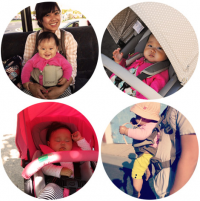
Traveling With a Baby Tips Tips Traveling Baby, Traveling Baby Tips Plane, Child Safety, Traveling Baby Care: Being away from home is a big change in routine for both, you and your baby, so you will have to plan ahead, even anticipate problems and be prepared to deal with them, so that the entire family enjoys a good holiday. Taking advice from parents, who have taken their children on holidays, is a good idea. * If you are hiring a car, ask the company to provide you with a baby seat, so that you don't have to carry one. * While booking a holiday, find out what facilities the tour operator provides. Children, who are two years or below, usually travel for free. Your baby will require a passport. * It is easier to travel if you are breast-feeding, you don't have to worry about sterilized bottles or clean water to make bottle-feeds. * Find out what kind of childcare facilities the operator provides, such as baby cots, prams, highchairs etc., so that you do not have to carry these things with you. * Take toys for the journey, old and new ones, so that the baby will be occupied and will not get tired of the journey. * Once you decide on the holiday location, consult your doctor about the vaccination your baby requires before you decide the holiday dates. If there are vaccines to be taken, it is best to take them a little before the holiday date. Some vaccines cannot be taken together and may need a few weeks in between. So, you will need time to vaccinate your baby. * Take your baby sling or back carrier it will occupy less space and it will be easy to carry the baby around. * While booking your holiday, you can book a hotel that provides childcare facilities such as nannies, crèches etc. You should check them before using them and only avail them when you are sure your baby will be well taken care of. * The most difficult part of your holiday will be the journey, and with a small baby, it will not be easy. You should book an air cot well in advance. Get seats that are together, so that you have ample space on the flight. Book meals for your children in advance, it would help if they could be served before you are served. * There could be delays on the way, so you should carry enough snacks for the baby, especially drinks. It is better if the snacks don't consist of sticky food, as they are messy. * If you are holidaying in a place where the weather is hot, make sure that you carry sun block for your baby as his/her skin is delicate and more likely to get sunburns.

Polio Symptoms and Treatment in Babies Polio Symptoms , Polio Treatment, Polio Symptoms Babies: Polio has been wiped out of most countries with only a few developing nations facing its threat now. For this, babies are now being given routinely polio vaccines to ward off any possible threat to their health. However, due to polio being almost eliminated now, most parents often do not realize how important it is to vaccinate their little one against this disease. * Symptoms Given that polio can have life threatening complications, it is surprising to note that most people infected with the disease never realize that they are affected. People suffering from non-paralytic polio or abortive poliomyelitis may reveal the usual symptoms of viral illness like fever, sore throat, headache, vomiting, malaise, back pain, neck pain, pain or stiffness in limbs, muscle spasms and even meningitis. Paralytic polio, which is a more serious but rare form of this disease shows initial symptoms of fever and headache and other signs of non-paralytic polio in the beginning. However, later signs like loss of reflexes, severe muscle aches or spasms, loose and floppy limbs might show up as the infection progresses. Paralysis may hit all of a sudden. * Treatment * Polio is untreatable once infected and hence the prime focus of a treatment is usually aimed on offering comfort, quick recovery and averting further complications. * The patient should be given complete bed rest. * A nutritious diet is strictly advised. * Antibiotics are usually prescribed to deal with secondary infections. * Analgesics are advised to relive pains. * Portable ventilators to help in comfortable breathing. * Physiotherapy to avoid deformity and loss of muscle function.
Indian Baby Care Tips There are various methods that one uses to ensure good health of a child. Given below are the Tips for baby’s good health care. * Make sure that Baby wearing clothes are Dry & deeply cleaned (with Dettol water). * Change nappy or clothes as soon as it gets wet or on Regular basis. * Ensure that the baby’s nails do not grow too long, cut them on regular basis. * Baby massage has been a tradition in Indian society. It is believed that regular massage helps to weight gain, improves body movement and strength of baby. * Before you take your baby for bath, get everything that you need at one place like baby soap, towel, hair oil, powder etc. * Never leave your baby alone in water. * Use only gentle baby soap. * A soft towel or soft cloth should be used to dry your baby. * Bath for a newborn baby is not required on daily basis as their skin is very delicate, Sponge bath is more suitable for a baby. * Be very gentle while bathing your baby. * Your baby could suffer from various skin problems if you do not provide proper protection to the baby skin. Use products that are especially for soft and sensitive baby skin. * Apply soft and gentle soap and shampoos which does not contains hard chemicals & use only branded products. Baby’s skin absorbs lotion easily so avoid strong moisturizers. According to season we should use body lotion (mild) cream for baby skin.
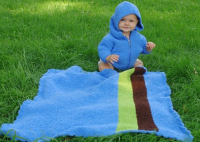
Baby Blanket Ideas Babies give one of the most beautiful sites of nature when they are wrapped in these soft blankets. Blankets for babies are very essential as they protect them from harsh weather and also make way for a cozy sleep. * You can also spread the blanket on the floor to let the baby play freely sitting on it. Blankets can also be used in strollers for the baby to sit or lie cozily. While ransacking a mothering store, you are sure to find multiple blankets, each varying in size, color, texture and pattern. * While selecting a baby blanket, make sure that it is soft lest it causes rashes to your baby. Also, any blanket you choose, it should be cute. What good would be a baby blanket if it’s not super cute and simply adorable! Take a look at the various ideas for baby blanket in the lines below. * Fleece Baby Blanket * Patched Baby Blanket * Stylish Baby Blanket