Untitled Document
| Shri Goparaju Ramachandra Rao (aka Gora) (1902-1975) |
| Indian social reformer, rationalist and atheist |
Shri Goparaju Ramachandra Rao is a paramount example of how an atheistic stance can provide the basis for humanity’s advancement. Gora from a relatively early age decided on a life devoted to atheism. In his books on the subject including Atheism Questions and Answers, An Atheist with Gandhi, and Positive Atheism, he attempted to portray, promote and explain atheism in a more favourable light. The great Mahatma Gandhi himself, with whom Gora - as a result of their shared goal of social progress - stroke up a close relationship, was quick to question Gora on the issue of atheism, challenging Gora to differentiate between it and godlessness.
Gora, not unaccustomed to having to defend his particular view, replied as follows:
“Godlessness is negative. It merely denies the existence of god. Atheism is positive. It asserts the condition that results from the denial of god.”
“Atheism bears a positive significance in the practice of life. Belief in god implies subordination of man to the divine will. In Hindu thought man's life is subordinated to karma or fate. In general, theism is the manifestation of the feeling of slavishness in man. Conversely, atheism is the manifestation of the feeling of freedom in man. Thus theism and atheism are opposite and they represent the opposite feelings, namely, dependence and independence respectively.”
“Moral conduct is not a passport to heaven; it is social necessity”
Gora was not satisfied with merely upholding atheism with words. It is his actions which provide us with his greatest contribution to Indian society specifically and humanity in general. Born into a high caste Orthodox Hindu family and marrying Saraswathi in 1922 when she was only 10 (their religion dictated at that time that girls must marry pre-puberty), Gora was exposed to the inadequacies of societal practices in India. |
 |
| Vinoba Bhave (extreme right), Gora (in the middle) and Lavanam (extreme left) |
His campaigns - underpinned by atheism throughout - strove to abolish both the caste system with it’s ‘untouchables’, and the idea of ‘karma’ or divine fate. A quote from his work in 1973 provides us with his reasoning behind the atheistic nature of his social work and an additional propagation of this view point:
“…atheism shifts the basis of morality from faith in god to obligations of social living. Moral conduct is not a passport to heaven; it is social necessity.”
“Atheism alone is the surest way to morality”
-From Atheism Questions and Answers
No-compromise-nature made him to quit the job
After being forced to give up his profession as a college lecturer in 1940 for expressing his views on atheism, Gora along with his wife Saraswathi co-founded the Atheist Centre. He engaged himself in the promotion of adult education and the eradication of 'untouchability'. |
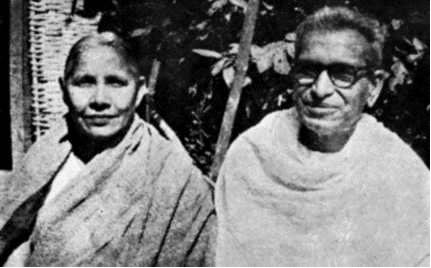 |
| Highly influential thinker and social reformer. Dedicated his life to develop atheistic thought in Andhra and beyond. Authored several works. Founded the AtheistCenter, Vijayawada. Their son Lavanam is also a well-known atheist and thinker. |
| |
The atheistic ethos remained essential as Gora explained at the time:
“We take man as man. Thus by discarding the labels and mixing up people in the general stream of humanity, we hope to remove ‘untouchability’ also.”
“I find that the atheistic outlook provides a favorable background for cosmopolitan practices. Acceptance of atheism at once pulls down caste and religious barriers between man and man. There is no longer a Hindu, a Muslim or a Christian. All are human beings. Further, the atheistic outlook puts man on his legs. There is neither divine will nor fate to control his actions. The release of free will awakens Harijans and the depressed classes from the stupor of inferiority into which they were pressed all these ages when they were made to believe that they were fated to be untouchables. So I find the atheistic outlook helpful for my work. The results justify my choice.”
-From An Atheist with Gandhi
Humanitarian vision with scientific outlook
|
 |
The Atheist centre to this day provides counseling and promotes inter-caste and casteless marriages. Owing largely to the dedication of Saraswathi who herself became wholly committed to atheism; its impact on day-to-day life in India cannot be overstated.
The centre also works to abolish child marriages, provides aid to prostitutes, unwed mothers and vulnerable women, explodes superstitious beliefs by holding fire walking demonstrations and debunking other ‘miracles’, educates against belief in witchcraft and sorcery, promotes sexual education and family planning and many other reforms.
The original atheistic theme of the establishment has been maintained; it continues close relationships with numerous atheist, humanist and rationalist organisations around the world with the common cause of spreading rationalistic thinking and cultivating scientific outlook. |
|
The international Humanist Award 1986 was awarded to the Atheist centre and Saraswathi herself was the recipient of the G.D.Birla International Award for Humanism in 2000.
Roots of land and traits of family go hand in hand
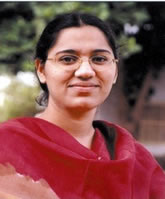
Dr. Demos Gora is the daughter of Dr. Samaram and grand-dauther of the great Atheist savant and reformer Gora. She is a medical graduate. She was awarded gold medal for the best student in surgery in her medical college. In the International Conference, she was invited to present a paper on the practical social change programmes of Atheist Centre in the direction of women empowerment, fight against superstitions and help of Atheist Centre to women who are victims of social problems. |
 |
|
| In addition to this, as a reputed dancer, she was given opportunity in the IHEU Conference on Empowering Women held at Conway Hall, London on 15-16 November, 2003 to present Kuchipudi dance on the Darwin's theory of Evolution and also on the efforts for women empowerment in our country. She explained how Atheist Centre was utilizing the traditional classical dance form to convey the message. |
| |
| |
|
|
|
|

